Description
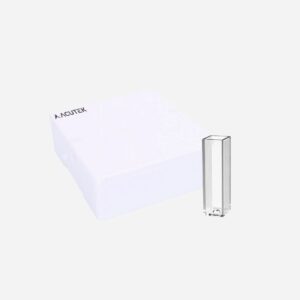
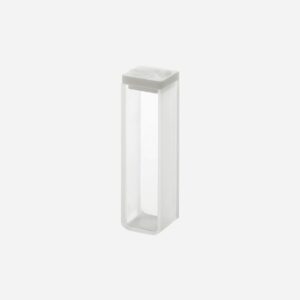
The Large Cell is a high-volume laboratory cuvette designed to accommodate larger sample volumes for spectrophotometric, fluorometric, or other optical measurements. This versatile instrument is widely used in research laboratories, industrial testing, pharmaceutical analysis, and educational institutions where precision, reliability, and convenience are critical.
Large cells are essential when experiments require higher sample volumes to enhance measurement sensitivity, ensure reproducibility, or accommodate low-concentration analytes. By increasing the optical path length or total sample volume, large cells allow more accurate absorbance or fluorescence readings, making them indispensable for advanced laboratory protocols.
Manufactured from high-quality optical materials such as quartz, glass, or specialized plastics, large cells combine durability, chemical resistance, and optical clarity. Quartz cells are ideal for UV measurements, transmitting light at wavelengths down to 190 nm, while glass cells are suitable for visible-light applications.
The design of large cells ensures uniform optical surfaces and consistent path lengths, critical for accurate and reproducible measurements.
Large cells are compatible with most standard spectrophotometers, fluorometers, and other optical instruments, allowing seamless integration into existing laboratory setups. Their precise dimensions ensure secure placement in instrument holders, maintaining correct alignment of the light path and ensuring reliable results. Some models offer variable path lengths to adjust sensitivity according to sample concentration and experimental needs.
Large cells are particularly valuable in research requiring high-precision measurements, long path lengths, or low-concentration samples.
Educational institutions also benefit from large cells in teaching laboratories. Students conducting advanced spectrophotometry or fluorescence experiments gain hands-on experience with instruments that accommodate larger sample volumes. Reusable quartz or glass cells provide durability for repeated experiments, while disposable plastic versions offer convenience for high-throughput educational settings.
Maintenance of large cells is straightforward but important. Avoiding abrasive materials ensures long-term performance and minimizes the risk of scratches, which can affect measurement accuracy. Proper storage in protective racks further prolongs their lifespan.
Durability and chemical resistance are key features of high-quality large cells. Quartz and glass models withstand repeated use, cleaning, and sterilization, maintaining optical integrity over time.
In conclusion, the Large Cell is an essential laboratory tool for high-volume spectrophotometric, fluorometric, and optical measurements.








Reviews
There are no reviews yet.