Description
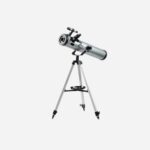
Reflector Telescope Aperture refers to the diameter of the primary mirror used in a reflector telescope. Unlike refractor telescopes that use lenses, reflector telescopes collect and focus light using mirrors. The size of the primary mirror, known as the aperture, is the most important factor influencing image brightness, resolution, and the ability to observe faint celestial objects.
A larger aperture mirror collects more light, allowing the telescope to reveal fainter objects such as distant galaxies, nebulae, and star clusters. This makes reflector telescopes especially popular among amateur and professional astronomers interested in deep-sky observation.
Small aperture reflectors, usually around 76 mm to 114 mm, are suitable for beginners. These telescopes provide good views of the Moon, planets, and brighter deep-sky objects while remaining affordable and relatively portable.
Medium aperture reflector telescopes, ranging from 130 mm to 200 mm, offer a significant improvement in performance. With increased light-gathering power, they allow observers to see greater detail in nebulae, resolve more stars in clusters, and observe surface features on planets with improved clarity. These apertures are popular among hobby astronomers who want strong performance without excessive size or complexity.
Large aperture reflector telescopes are designed for advanced observation. Mirrors of 250 mm and above provide exceptional brightness and resolution, making it possible to observe faint galaxies, subtle nebula structures, and distant star systems.
One of the key advantages of reflector telescope apertures is their cost efficiency. Mirrors are generally less expensive to manufacture than large precision lenses, allowing reflector telescopes to offer larger apertures at a lower cost. This makes them the preferred choice for users who want maximum light-gathering capability within a reasonable budget.
Aperture also directly affects the resolving power of a reflector telescope. Larger mirrors can distinguish fine details and separate closely spaced objects, such as double stars. This improved resolution enhances observations of lunar craters, planetary surface features, and fine structures in deep-sky objects.
While eyepieces control magnification, the maximum useful magnification of a reflector telescope depends on its aperture.
Choosing the right reflector telescope aperture depends on observing goals, experience level, and available space. Beginners often prefer smaller or medium apertures for ease of use, while experienced astronomers prioritize larger apertures for deep-sky exploration.
Environmental conditions play an important role in how effectively a reflector telescope aperture performs. In areas with light pollution, moderate apertures may offer better contrast and usability, while darker skies allow large apertures to reach their full potential. Proper collimation and mirror maintenance are also essential to ensure optimal image quality.
Reflector telescopes with moderate apertures are widely used in educational institutions and astronomy clubs. Their simple optical design, strong performance, and affordability make them excellent tools for teaching observational astronomy and exploring the night sky.
In conclusion, Reflector Telescope Aperture is the defining factor that determines a telescope’s brightness, resolution, and deep-sky capability. A well-chosen aperture unlocks stunning views of the universe and enhances the overall astronomy experience.




Reviews
There are no reviews yet.